
Direct answer
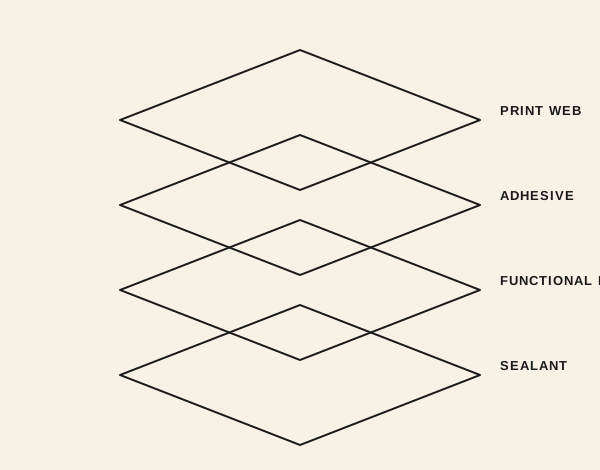
1. Start with the product and the filling line
Write down what the product is, what damages it (oxygen, moisture, light, grease, puncture, temperature), the shelf life you need, and how it will be filled. The filling line, whether yours or a co packer's, narrows the format choice faster than anything else.
2. Choose the format
Rollstock fits form fill seal and flow wrap lines. Premade pouches fit pouch fillers and hand filling, and make features like zippers and spouts easier to source. Bags fit their own lines, such as wicket bag loaders.
3. Settle the structure and barrier
The structure is the stack of films and coatings that protects the product. If you do not know it, start from the current package or a description of what it must protect against. Barrier is described with units and test conditions, not adjectives.
4. Plan print and artwork
Print method, the number of colors, and whether ink is on the surface or buried between layers all affect cost, lead time, and durability. Make sure artwork, dieline, and stated dimensions agree before you ask for quotes.
5. Prepare one complete RFQ
Send every supplier the same information, mark unknowns as unknown, and separate annual usage from order quantity. This is the step that makes quotes comparable later.
6. Compare quotes on the same basis
Line up structure, gauge, dimensions, quantity, features, tolerances, and delivery basis before comparing unit prices. A lower unit price can reflect a different specification, a different delivery basis, or a larger minimum.
7. Qualify the supplier
Qualify the company and the proposed package separately. Ask for the documents that match your application, confirm where the product is made, and keep a record of the decision.
8. Validate samples on the line
Match the sample to the decision. A digital proof checks content, a structural sample checks fit, and a line trial with production material checks whether the package actually runs.
9. Control the specification for every reorder
Keep one versioned specification, record approved tolerances, keep retained samples, and require notice before any change. This is what keeps the fifth order the same as the first.
10. Plan for a second source
A second source protects supply, but only if the baseline specification is complete enough for another supplier to match it. Prepare that baseline before you need it.
Questions buyers ask
Where should a first time packaging buyer start?
Start with the product and how it will be filled. That decides the format, and the format decides which information the RFQ needs.
Do I need a packaging engineer to buy flexible packaging?
Not always. A complete RFQ, a current sample, and a supplier willing to explain its assumptions cover many projects. Technical help becomes more important for new structures, new machines, and demanding shelf life targets.
How many suppliers should I ask to quote?
Ask enough to get a fair comparison, and send each one the same information. Comparing quotes is only useful when they describe the same package.
See something that needs correcting? Tell Matt.