Direct answer
The machine finishes the package
With premade pouches, the converter has already formed the pouch. With rollstock, the filling line forms the film around or into a package, fills it, and seals it. Vertical form-fill-seal, horizontal form-fill-seal, and flow wrapping use different geometries and operating conditions.
Across the web and down the web
Web width is measured edge to edge across the roll. Repeat or cutoff is measured in the machine direction and defines the printed package length. Confusing the two can produce the wrong artwork layout, impression count, or quote assumption.
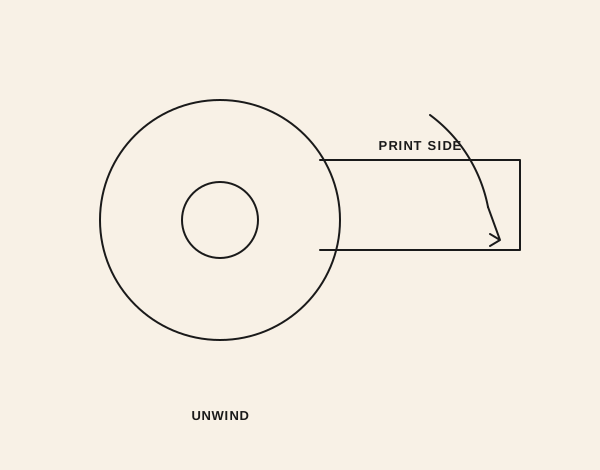
Unwind direction
Unwind describes which edge and print orientation present to the machine as film comes off the roll. Suppliers often use numbered unwind diagrams. Do not rely on “copy up” or “logo first” without a drawing.
Roll geometry
Core inside diameter, maximum outside diameter, roll weight, splice count and type, and winding tension affect handling and equipment. A converter can supply film that is dimensionally correct but operationally wrong if these are omitted.
| Specification | What it controls | Where to find it |
|---|---|---|
| Web width | Film width across roll | Spec or roll label |
| Repeat/cutoff | Package length along web | Art/dieline/spec |
| Unwind | Print orientation into machine | Unwind diagram |
| Core/OD | Roll fit and handling | Machine or current PO |
| Structure/gauge | Package performance | Approved material spec |
Questions buyers ask
Is rollstock one word?
The industry uses both “rollstock” and “roll stock.” They generally refer to the same supplied web format.
How many packages are on a roll?
If roll length and repeat are known, divide total length in matching units by repeat. Allow for setup waste, splices, and other operational losses when planning usable output.
See something that needs correcting? Tell Matt.