
Direct answer
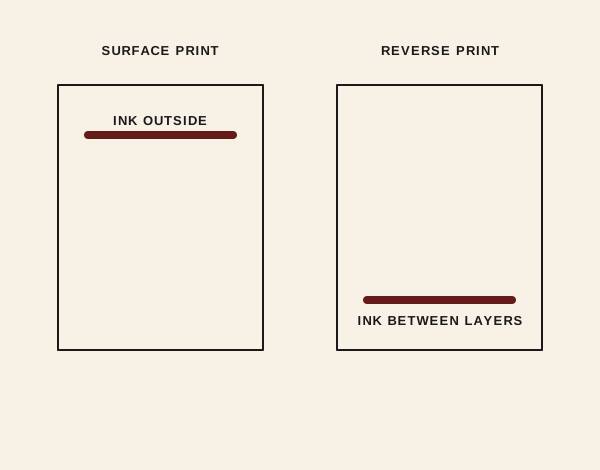
Where is the ink?
That is the useful first question. On a surface-printed package, the ink is exposed to handling and whatever contacts the outside of the film. On a reverse-printed laminate, the artwork is printed as a mirror image on the inside of a clear web. Lamination places the ink between layers.
The print method affects artwork orientation, material construction, visual depth, rub resistance, converting sequence, and sometimes cost. It does not, by itself, tell you the barrier or seal performance of the finished package.
Why surface printing is used
Surface print can suit single-web bags and other constructions where lamination is not required. It can avoid adding a laminate solely to protect graphics. That does not mean it is automatically simpler. The exposed ink system must fit the film, treatment, package use, winding, converting, filling, and distribution.
- Confirm the film is treated for the selected ink system.
- Define rub and scuff expectations.
- Keep ink and coatings out of restricted areas unless approved.
- Ask whether an overprint varnish is part of the print specification.
Why reverse printing is used
Reverse print protects the ink between webs. The clear outer web provides the viewing surface, which can give graphics depth and reduce direct abrasion. It also means the print is part of a laminate. Adhesive, cure, bond, web matching, and finished construction now belong in the review.
- Artwork must be prepared for reverse orientation.
- The outer web must be clear where graphics need to show.
- Lamination does not make every structure suitable for every product.
How to identify the current construction
Do not decide from a photo alone. A fingernail rub can sometimes suggest exposed ink, but coatings can complicate that test. Start with the approved structure and print specification. If those do not exist, send an unused package for manufacturer review or appropriate analysis.
| Question | Surface print | Reverse print |
|---|---|---|
| Ink location | Exposed outside surface | Inside face of clear outer web |
| Typical protection | Ink system and optional varnish | Trapped within laminate |
| Construction clue | Often single web, not always | Requires a clear web and lamination |
| Buyer check | Rub, seal area, exposure | Structure, bond, cure, orientation |
Questions buyers ask
Is reverse print always better?
No. It offers strong ink protection, but it adds a laminated construction. The right choice depends on performance, format, economics, appearance, and process.
Can surface print look high quality?
Yes. Film, treatment, ink, plates, press control, artwork, and coatings all influence appearance. Print location is not a quality grade.
See something that needs correcting? Tell Matt.