
Direct answer
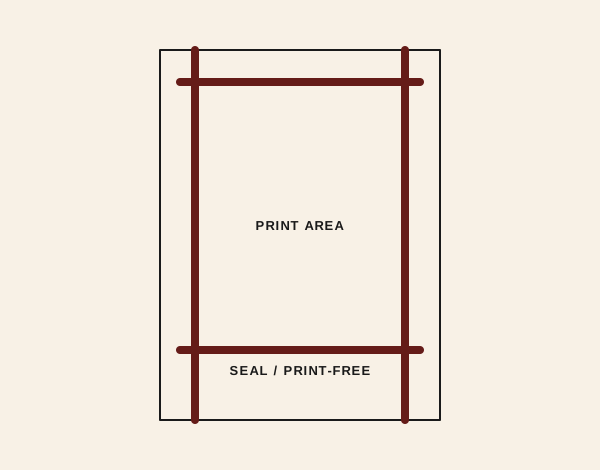
A seal is an interface
Heat sealing brings two compatible surfaces together under temperature, pressure, and dwell. Anything between those surfaces can change the interface. Product dust, oil, wrinkles, coatings, and ink all deserve attention.
On a reverse-printed laminate, ink may be trapped away from the active sealant surface. On a surface-printed web, artwork can be much closer to the sealing event. The exact construction matters more than the label “printed film.”
What can go wrong
Possible issues include weak or inconsistent seals, ink picking or transfer to jaws, visible distortion, odor, blocking in the roll, and ink entering areas where direct or indirect food contact was not intended.
- Seal contamination or channel leaks
- Ink transfer under hot jaws
- Unapproved product-contact exposure
- Registration drift into the seal
- Appearance changes after sealing
How artwork should handle seal areas
The dieline should show seal zones, folds, gussets, zipper locations, tear notches, eye marks, and tolerance. Designers need a clear no-print rule where one applies. If graphics intentionally cross a seal, the print and package suppliers need to approve the construction and tolerance before production artwork is released.
What to send for review
Send the dieline, finished package drawing, proposed art, complete film/laminate specification, ink and coating requirements if known, product contact conditions, and sealing equipment/settings. If this is a repeat job, include a sealed production sample rather than only a flat proof.
| Area | Question to settle | Useful evidence |
|---|---|---|
| Side/end seal | Must this area be ink-free? | Dieline + sealed sample |
| Zipper seal | Will heat/pressure contact print? | Pouch drawing + process |
| Fin/lap seal | Which surfaces meet? | Web diagram + machine setup |
| Food-contact side | Is any ink exposed or transferable? | Full construction documentation |
Questions buyers ask
Should designers always knock out the seal area?
Not automatically, but it is a conservative default until the structure, ink system, seal geometry, and manufacturer requirements are known.
Does varnish make ink safe in a seal?
Not by itself. A varnish may protect surface ink from rub, but seal performance and product-contact suitability still require separate review.
See something that needs correcting? Tell Matt.