Short answer
Key takeaways
- The filling equipment decides the format before price does. No forming equipment and no co packer running it usually means premade pouches.
- Rollstock tends to fit stable, high volume SKUs on a line already built for it. Premade pouches tend to fit launches, many SKUs, and features like zippers, spouts, and flat bottoms.
- The two RFQs ask for different information. Rollstock needs machine and roll details. Pouches need finished dimensions and features.
- Compare total cost per good package, including setup waste, labor, changeovers, storage, and line speed, not only the price of film or pouches.
- Many brands start on premade pouches and move a SKU to rollstock once volume and equipment justify it. Plan that move before artwork is locked.
What you actually receive
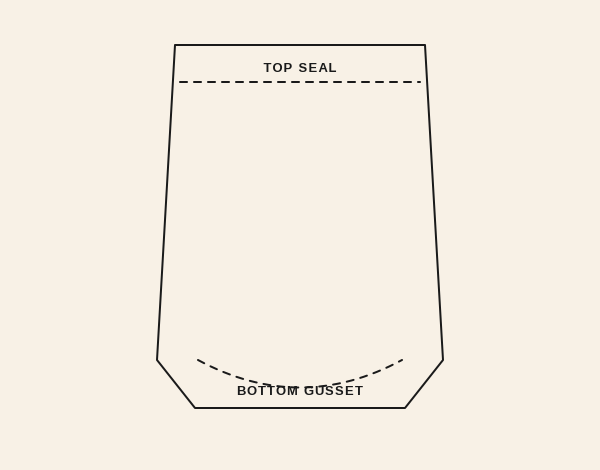
With premade pouches, the converter has already printed, laminated, cut, and sealed the package on three sides, and has added any zipper, spout, valve, tear notch, or hang hole. Your line receives finished pouches in cartons. With rollstock, the converter prints, laminates, and slits the film to a set width and winds it onto a core. Your machine forms the tube or web, fills it, seals it, and cuts each package. The forming step belongs to the converter in one case and to your line in the other, and most of the differences that follow come from that one fact.
Start with the filling operation
Ask how the product will be filled before asking which format is cheaper. A vertical form fill seal machine, a horizontal flow wrapper, or a thermoform fill seal line is built to run rollstock. A rotary pouch filler, a semi automatic filler, or hand filling with a band sealer is built to run premade pouches. If the plant has neither, a co packer may. A format cannot be chosen responsibly until someone names the machine, its model, and who owns it.
Volume per SKU and SKU count
Rollstock usually rewards long, stable runs of the same item, because the line forms packages continuously and changeovers interrupt that. Premade pouches usually fit programs with many SKUs, seasonal items, and test launches, because changing pouches on a filler can be simpler than rethreading film and adjusting forming parts. Look at volume per SKU and how often each SKU changes, not just total volume across the program.
Features the package needs
Premade pouches make features like press to close zippers, spouts, degassing valves, flat or box bottoms, shaped profiles, and windows easier to source, because the converter applies them under controlled conditions. Some features can run on form fill seal equipment, but they depend on the machine, the attachments, and the film. If the marketing brief calls for a reclosable stand up package, confirm the line can make it before assuming rollstock.
Total cost per good package
Film on a roll often looks less expensive per package than a finished pouch because your line does the converting. That comparison is incomplete. Build the cost on a good, sellable package and include setup scrap, reject rate, line speed, labor per shift, changeover time, plates and tooling, freight, warehouse space, and the minimum order for each item. Rollstock can lose its advantage on a slow or wasteful line. Premade pouches can win when they avoid capital, labor, and changeover losses. The right answer comes from your numbers, not a rule of thumb.
Lead time and inventory
Premade pouches add a converting step at the supplier, so plan for it in the schedule. Rollstock skips that step at the supplier but moves forming risk to your line, so plan for line trials on the first run. Finished pouches take more warehouse space per package and need careful storage so seals, gussets, and print are not damaged. Rolls need correct storage too, especially for temperature and core damage. Ask each supplier how they quote lead time from artwork approval to ship.
The RFQs ask for different details
Both formats need the product, structure if known, print and artwork, annual usage, normal order quantity, ship to location, and timing. Rollstock adds web width, repeat or cutoff, unwind direction, core size, maximum roll diameter or weight, eye mark position, splice rules, and the machine make and model. Pouches add finished outside dimensions, gusset size, seal widths, zipper or spout type and position, tear notch, hang hole, corner style, filling method, and how the pouches are packed in cartons.
Barrier does not depend on the format
Oxygen, moisture, light, and aroma barrier come from the film structure, not from whether it arrives as a roll or a pouch. The same laminate can often be supplied either way. What changes is the sealant, because a form fill seal machine seals at line speed while the product is falling or moving, and a pouch filler seals a finished pouch at the top. Ask the supplier which sealant they recommend for your machine and why.
Moving from pouches to rollstock later
Many programs launch on premade pouches and move a high volume SKU to rollstock once sales are steady and equipment or a co packer is available. That move goes smoother when the artwork, dieline, and structure are planned for both formats early. Before switching, get the machine specification, run a line trial with production film, and compare the cost per good package on real line data, not on the quote alone.
When a co packer is involved
If a co packer fills the product, the co packer's equipment usually decides the format. Ask the co packer for the machine make and model, the approved film or pouch specification, the core size and roll limits they accept, and any splice or eye mark rules. Send that sheet to every supplier you ask to quote. A quote built without it may look complete but fail at the first line trial, and the cost of that failure lands on the launch date.
Questions to ask a premade pouch supplier
Ask how they confirm finished dimensions and gusset before production, which zipper and spout options they apply in house, how pouches are packed so seals and gussets are not crushed, what overrun and underrun tolerance applies, how they control color from run to run, and what sample they can provide for a fill test with your actual product. Ask for the lead time from approved artwork to ship, stated separately for the first order and for reorders.
Questions to ask a rollstock supplier
Ask which machines they have supplied film for that match yours, how they set web width and repeat tolerance, where the eye mark sits and how registration is checked, how many splices a roll may contain and how they are marked, what core and roll diameter limits they work to, and whether a technical person can attend or support the first line trial. Ask how they record roll level data so a problem on the line can be traced to a specific roll.
Recyclable and mono material structures
If a recyclable or mono material structure is a goal, raise it at the start. These structures can behave differently on form fill seal equipment and on pouch fillers, especially in sealing range and stiffness. The format choice and the structure choice should be tested together. Ask the supplier which claims they can document for the proposed structure and do not print an on pack recycling claim until it has been reviewed.
Common mistakes
Buyers run into trouble when they quote rollstock without the machine specification, assume any film will run on any machine, compare a film price to a pouch price without the line costs, keep a high volume SKU on premade pouches long after volume would justify a change, or pick a feature for marketing reasons before confirming the filling method can handle it.
| Question | Premade pouches usually fit when | Rollstock usually fits when |
|---|---|---|
| Filling equipment | You have a pouch filler, hand filling, or a co packer running pouches | You or your co packer run form fill seal, flow wrap, or thermoform equipment |
| SKU count | Many SKUs, flavors, or seasonal items | Few SKUs that run for long periods |
| Volume per SKU | Low to moderate, or still uncertain | High and stable |
| Package features | Zippers, spouts, valves, flat bottoms, or shaped pouches are needed | A pillow, gusseted, or flow wrapped package works |
| Changeovers | Frequent changes between items | Long runs with few changes |
| Capital | You want to avoid buying forming equipment | Forming equipment is already in place or justified |
| What the RFQ needs most | Finished dimensions, gusset, features, filling method | Web width, repeat, unwind, core, roll limits, machine model |
Questions buyers ask
Is rollstock always cheaper than premade pouches?
No. Film on a roll often costs less per package than a finished pouch, but the comparison is only fair when it includes setup scrap, labor, line speed, changeovers, storage, and the cost of the forming equipment. Compare the total cost of a good, sellable package.
Can the same film structure be supplied as rollstock and as pouches?
Often, yes. Barrier comes from the structure, so the same laminate can usually be supplied either way. The sealant may change because a form fill seal machine and a pouch filler seal under different conditions.
What do I need to send to quote rollstock?
Send the product, machine make and model, web width, repeat or cutoff, unwind direction, core size, maximum roll diameter or weight, structure if known, artwork, annual usage, order quantity, and ship to location. A photo of a current roll label helps.
What do I need to send to quote premade pouches?
Send the product and fill weight, finished outside dimensions, gusset, zipper or spout needs, tear notch and hang hole, structure if known, artwork, filling method, annual usage, order quantity, and ship to location. An unused sample is often the fastest way to answer most of these.
When should a brand move a SKU from pouches to rollstock?
Consider it when the SKU's volume is steady, the artwork is stable, and forming equipment or a co packer running it is available. Run a line trial with production film and compare the cost per good package on real line data before switching.
See something that needs correcting? Tell Matt.