
Packaging format
Rollstock: specifications, equipment, and what buyers should know.
A practical guide to printed and unprinted flexible-packaging rollstock for food packaging lines.
Direct answer
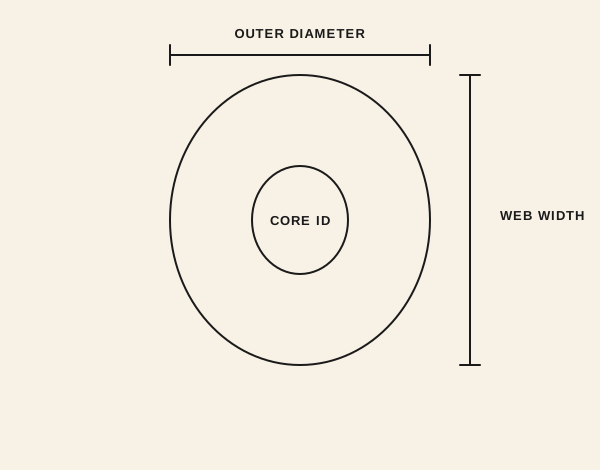
The roll has to run, not just look right
A rollstock quote is tied to the equipment that will use it. Web direction, unwind direction, core, roll diameter, splice rules, registration, coefficient of friction, and sealing conditions can matter. Not every job needs every detail on day one, but the filling line cannot be an afterthought.
- Tell me the machine make and model if you have it.
- Send a roll label or purchase specification.
- Include web width and repeat before estimating impressions.
Printed and unprinted
Artwork, number of colors, print side, registration requirements, and finish affect the manufacturing path. For repeat work, an art file and an existing printed sample help establish what needs to match. For a new package, the dieline and print-ready artwork may still be in development.
Structure and barrier
The correct film or laminate depends on the product, target shelf life, distribution, filling conditions, seal requirements, and line behavior. A material name by itself does not settle the structure. If you do not know it, send the package or spec instead of guessing.
Buyer questions
Questions worth settling before the quote.
What is web width?
Web width is the width of the film across the roll, measured from edge to edge. It is not automatically the finished package width because forming and sealing geometry may consume part of the web.
What is repeat or cutoff?
Repeat, sometimes called cutoff, is the distance along the web allocated to one printed package repeat. It helps determine how many impressions fit in a given roll length.
Can I quote without knowing the structure?
Yes. A current specification, roll label, supplier invoice, package sample, or clear photographs can give the manufacturer a place to start. Final material selection still requires technical review.
Keep reading