
Buyer tool
Rollstock Impression Calculator
Impressions are first-class here. Start with footage, desired impressions, or the rolls you actually know.
Calculation result6,667 impressions
5,000 linear feet at a 9-inch repeat.
- Formula
- (5,000 ft × 12) ÷ 9 in = 6,667 impressions
- Assumptions
- One impression per repeat in the machine direction. No multi-lane yield assumed.
- Missing information
- For actual usable yield, confirm splices, setup loss, roll tails, and machine waste.
Mathematical conversion is not an order-quantity recommendation.
Repeat and footage can describe theoretical impressions. Final order quantity must be confirmed with the converter using the applicable manufacturing, roll, waste, tolerance, and commercial assumptions.
Repeat and footage can describe theoretical impressions. Final order quantity must be confirmed with the converter using the applicable manufacturing, roll, waste, tolerance, and commercial assumptions.
When to use it
Use it to translate between roll length, repeat, impressions, and approximate roll count for one machine-direction impression per repeat.
What you need
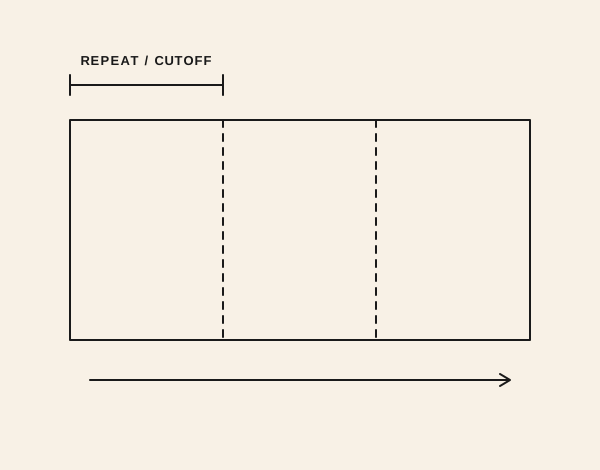
- Repeat / cutoff
- Known footage or desired impressions
- Roll length for roll-count estimates
- Optional buyer-supplied waste percentage
Formula
impressions = linear feet × 12 ÷ repeat (inches)Worked example
5,000 linear feet at a 9-inch repeat equals approximately 6,667 gross impressions.
Common mistakes
- Assuming multiple lanes without lane information
- Treating planning waste as a universal manufacturing allowance
- Ignoring splices, setup, roll tails, core, OD, and supplier tolerance
Buyer questions
How much material do I need for 300,000 impressions?
Enter 300,000 desired impressions and the known repeat. The tool returns theoretical feet and can add a planning percentage you provide.
How many impressions are in 5,000 linear feet at a 9-inch repeat?
Approximately 6,667 gross impressions before any losses.
Can this calculate multi-lane yield?
Not without sufficient lane and web-layout information. The tool intentionally avoids that assumption.