
Short answer
Key takeaways
- Roll stock is judged on your machine, so share machine details early.
- Ask how many colors print in one pass and how registration is held.
- Specify core, roll diameter, unwind, splice, and eye mark rules in writing.
- Approve with a line trial whenever you can.
Why the machine comes first
Printed roll stock is a component of your packaging line. Web width, repeat, eye mark position, unwind direction, core size, maximum roll diameter, and the sealant all depend on the machine that forms the package. Send the machine make and model, the current roll label, and any problems you have today. A supplier that asks for these details before quoting is protecting your line speed.
What flexo printing means for roll stock
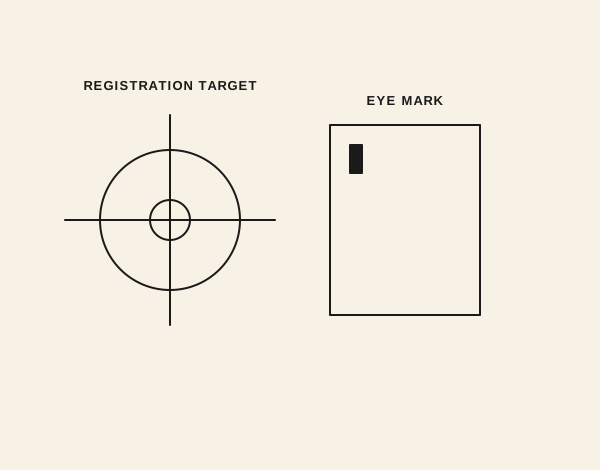
Flexographic printing uses plates on a central impression or stack press. It is the common process for printed roll stock because it runs efficiently at production speeds once plates are made. The number of print stations limits how many colors print in one pass. Ask how the supplier holds registration across the web and how it controls color from run to run.
Roll specifications to put in writing
Agree on web width and tolerance, repeat or cutoff, eye mark size and location, unwind direction, core inside diameter, maximum outside diameter or roll weight, splices allowed per roll and how they are marked, and how rolls are labeled and packed. Put these in the specification so every order runs the same way.
Food safety and documentation
For food packaging, ask which certification the plant holds and get the current certificate. Request food contact letters for the structure and inks and ask how lots are traced back to raw materials.
Lead time and the first order
Ask whether the lead time is counted from purchase order or from approved artwork, and how long proofs and plates take. For a first order, plan a line trial and agree in advance on what a passing trial looks like.
How to compare your shortlist
Ask every supplier the same questions on the first call. Which plant will run the job, and does its certificate cover that site? Which print method and how many colors in one pass? How is color approved and by what standard? What starts the lead time clock, purchase order or approved artwork? What documents come with the first order? Who is your day to day contact when something goes wrong? Write the answers in one table. The supplier that answers clearly and in writing is usually the one that will run your job the same way every time.
Where PCI fits
Where PCI fits: Matt Louie, who writes this site, sells for Poly Craft Industries (PCI). PCI prints by flexographic printing only, runs new 10 color presses, is SQF and GMI certified, quotes a standard lead time of 3 to 4 weeks after artwork approval, and supplies brands sold at major retailers. That makes PCI one supplier to put on a short list, not an automatic answer. Use the checks on this page to compare PCI with every other supplier you are considering.
Next step
If you want PCI to quote your spec, send it to Matt directly through the quote form at /quote/, use Ask Matt at /send-your-package/, email Matt@PolyCraftInd.com, or call Matt at (516) 849 6237.
Questions buyers ask
What is the difference between roll stock and pouches?
Roll stock is a continuous printed web that your form fill seal or flow wrap machine turns into packages. Pouches arrive already made and are filled and sealed on your line or by a co packer.
What machine details does a roll stock supplier need?
Machine make and model, web width, repeat or cutoff, unwind direction, core size, roll diameter or weight limits, and eye mark requirements.
How many colors can a 10 color flexo press print?
Up to ten print stations in one pass. Whether a design needs all ten depends on the artwork, and some stations may be used for white or coatings.
Should I run a trial before ordering roll stock?
Yes, whenever possible. A trial on your own machine is the best test of tracking, sealing, and speed.
See something that needs correcting? Tell Matt.