Direct answer
The short answer: which process for which job
Choose the process from the artwork, the quantity, how often the art will change, and the structure, not from a habit. A quote that names flexo and a quote that names rotogravure are not the same construction until you line up the plates or cylinders, the color count, and the film.
If two quotes already disagree on the process, treat that as a spec question. The field note on this site walks through that situation. Ask each supplier which process it assumed and what would have to be rebuilt to switch.
How each process works, in buyer terms
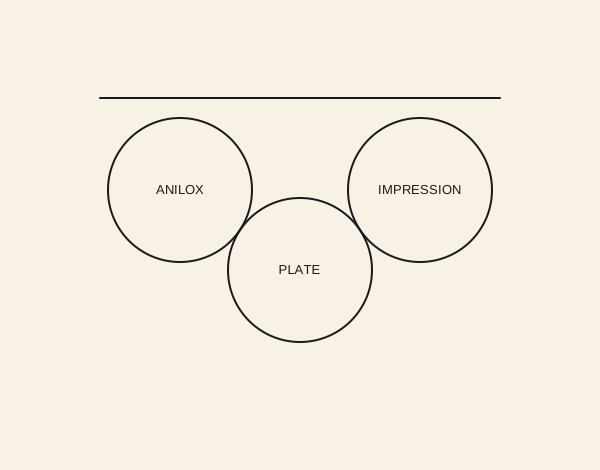
On a flexo press, each ink has a plate. The plate is mounted, ink is metered onto it, and the plate transfers that ink to the film. A 10 color press has ten stations, so one pass can carry up to ten inks, including white or a coating.
On a rotogravure press, each ink has a cylinder engraved with the image. The cylinder picks up ink in the engraved cells and transfers it to the film. The image lives in metal, not on a flexible plate. That difference is the whole tooling conversation.
Print quality and color fidelity
Rotogravure has a long reputation for smooth tone and fine detail on very long runs. Modern flexo, including a 10 color press, holds photographic art, spot brand colors, and white on clear film in one pass when the file, the plates, and the press control are built for that job. Neither process is a quality grade by itself.
Judge the package you need: small type, a photograph, a spot brand color, a varnish, or white under the art. Ask how color will be approved, and approve it against a standard you can point to. GMI is a print-quality certificate. PCI is GMI certified. The certificate does not choose the process.
Tooling: plates and cylinders
A flexo plate is made for one color, one repeat, and one press setup. Changing artwork means a new plate for each color that changed. A gravure cylinder is engraved for that color and that repeat. Changing artwork means a new or reworked cylinder. Cylinders are slower to change and harder to set aside for a short promotion.
Ask who keeps the tooling, whether you can take it to another plant, and whether the next plant can run it. Owning a plate or a cylinder on paper does not mean the next press can mount it. Get that in writing before you approve tooling.
Run size and changeover
Plates and cylinders both take setup. The difference buyers feel is how often the art changes and how long the job runs once the press is ready. A stable, repeating flexible package is where flexo is usually specified. A design that will not change for a very long run is where buyers still ask about rotogravure.
Send the quantity per order and the annual usage together. A single order quantity hides whether you will repeat the art. If you have many versions of one size, say so. Versioned art changes the tooling plan even when the bag size stays the same.
Substrate and structure
Both processes print films used for poly bags, pouches, and roll stock. The structure still has to be named: a single polyethylene web, a co-ex, or a laminate, surface print or reverse print. The process does not pick the film.
If you are matching a current package, send the structure or a sample. Do not switch process and structure in the same sentence and then compare the two quotes as if they were one package.
What 10 color flexo changes
Designs that used to need many gravure cylinders for spot colors plus process color can often be planned on a 10 color flexo press. PCI prints on two Uteco 10 color presses. One pass can carry up to ten inks. That is capacity, not a rule that the art must use all ten.
Count the inks you actually need. A two-color mark does not become a better package because ten stations are available. The color-count guide walks through that choice.
Five questions before you pick a process
Use the same five questions on every quote. If the answers differ, the quotes are not ready to compare.
- Is the image on plates or on cylinders?
- How many colors, including white and any coating?
- What happens to the tooling if the art changes?
- What quantity and reorder rhythm was the process chosen for?
- Is the film structure the same on both quotes?
Request a recommendation with the quote
Send Matt the artwork and the quantity. Ask for a process recommendation before you commit to tooling. A file that is not finished can still start the conversation if you send the color count and a sample of the current package.
| Question | Flexo | Rotogravure |
|---|---|---|
| Image carrier | A flexible plate for each color | An engraved cylinder for each color |
| Artwork change | New plates for the colors that changed | A new or reworked cylinder |
| Typical fit | Repeating flexible packages and multi-color art | Very long, stable runs |
| Color count | Up to the stations on the press | Up to the cylinder set on that press |
| What to send | Art, quantity, structure or a sample | The same inputs, so the answers match |
Questions buyers ask
Is rotogravure print quality better than flexo?
Not as a rule. Rotogravure is known for smooth tone on long runs. A modern flexo press can hold photographic art and spot colors when the file and the plates are built for it. Approve color against a standard, not against the process name.
When does flexo fit better than rotogravure?
When the package repeats, the art may change, and the color count fits the press. PCI prints on two Uteco 10 color presses. Send the artwork and the quantity before you commit to cylinders.
What is the tooling difference between flexo plates and gravure cylinders?
A plate carries one flexo color. A cylinder carries one gravure color. Plates are the usual way to revise flexible-packaging art. Cylinders are a heavier commitment when the art is still moving.
Can flexo match gravure for photographic artwork?
It can, when the separations, plates, and press are set up for that file. Ask for the proof you will actually approve. Do not decide from a process label alone.
Which process is faster to change artwork on?
Flexo plate changes are the usual path when art revises. Gravure cylinder changes take longer to plan. Ask the plant how a revision is handled on the process named in your quote.
See something that needs correcting? Tell Matt.