Direct answer
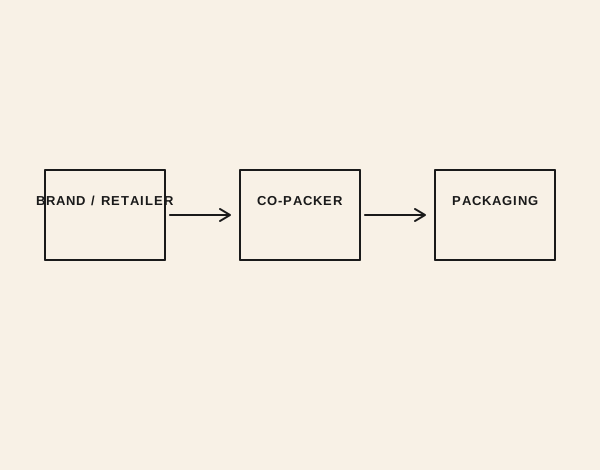
Start with the program baseline
This is most useful during sourcing model decision. List the affected SKUs, current package or controlled document, annual and release volumes, destinations, timing, ownership, and the decision the team actually needs to make.
- Confirm how co-packer applies to this program.
- Confirm how co-manufacturer applies to this program.
- Confirm how contract manufacturer applies to this program.
- Confirm how private label applies to this program.
- Confirm how formula ownership applies to this program.
- Confirm how nDA applies to this program.
Why it matters at operating scale
Buyers and brands use these terms interchangeably but they define who owns the formula and scope.
At higher volume, a small assumption can repeat across many orders, artworks, plants, or releases. Keeping the basis visible helps prevent a commercial shortcut from becoming an operational surprise.
A practical sequence
First separate confirmed facts from targets. Next identify which supplier, internal owner, OEM, or qualified reviewer can close each open question. Then compare proposals on the same basis and record the decision with its conditions.
- Preserve current evidence and revision dates.
- Use one row per SKU, artwork, plant, or commercial scenario when they differ.
- Agree on approval and change-control responsibilities before production.
Common mistake
Do not let a headline unit price, broad capability statement, or requested ship date stand in for the complete requirement. Ask which specification, quantity, delivery, approval, and ownership assumptions the response includes.
Boundary: This page organizes buyer and project information. It does not approve a film structure, gauge, barrier target, seal condition, food-contact position, shelf life, recyclability claim, machine setting, or supplier for a specific application.
Related work
See something that needs correcting? Tell Matt.