Direct answer
How a forming collar works
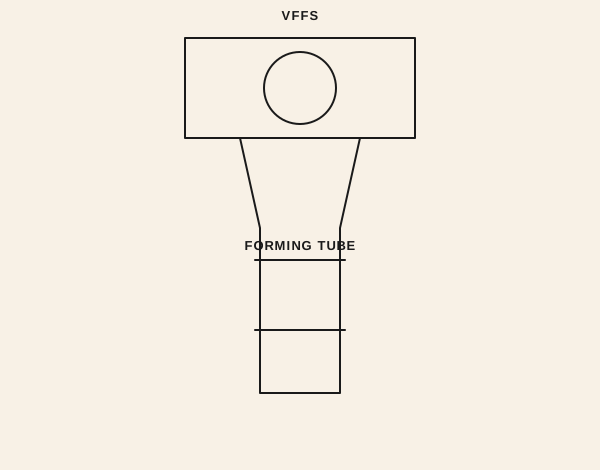
Rollstock enters the VFFS machine as a flat web. The forming collar guides that web around the forming tube so the film edges meet for the longitudinal seal. Product drops through the tube, and the machine makes the cross seals that define each bag.
Machine builders may use forming collar, forming shoulder, former or size parts for closely related components. Syntegon describes a VFFS size-part set as the forming shoulder, shoulder plate and tube; the exact assembly and terminology depend on the machine.
- Flat film is guided into a vertical tube.
- The film edges are presented for a fin seal or lap seal.
- The forming tube provides the path for product to enter the bag.
- Downstream jaws create the cross seals and separate finished bags.
Why collar fit matters
The forming set is designed around a machine, bag style, size range and packaging material. When those inputs do not fit the existing setup, the line may have trouble presenting the web consistently for tracking and sealing. Wrinkles, wandering film or poor seal alignment can involve the forming set, but they can also come from tension, friction, roll geometry, splice quality, setup or the film itself.
That is why a packaging buyer should not diagnose a collar problem from one symptom. Record the package and machine facts, then involve the equipment owner, OEM or qualified technician.
What to review when the bag changes
A width, format or material change can affect more than the artwork. Review the forming shoulder and tube, longitudinal sealer, cross-seal jaws, web width, repeat, eye-mark position, unwind, roll limits and product-clearance needs. Syntegon notes that new bag styles and sizes may use different VFFS size parts; the machine OEM should confirm the exact change parts and operating envelope.
Boundary: This general reference cannot establish compatibility with a specific machine, product, film construction, bag size, line speed or operating condition. Confirm the forming set and settings with the equipment owner, OEM or a qualified technician.
What to document before asking for film or change parts
- Machine manufacturer, model and serial number.
- Forming shoulder, tube or size-part identification and any controlled drawings.
- Current bag style, finished width and length, fin- or lap-seal arrangement and seal widths.
- Current web width, repeat, unwind, eye mark, core and maximum roll diameter or weight.
- Approved film construction and gauge, plus a current roll label and unused sample.
- Product, filling method, target rate and the exact symptom or proposed change.
The buyer's next question
If you are sourcing rollstock, ask which machine and forming set the quoted web is intended to run on. If you are changing the bag, ask the OEM which size parts and sealing components must change before artwork, film and production timing are finalized.
Related work
See something that needs correcting? Tell Matt.