
Direct answer
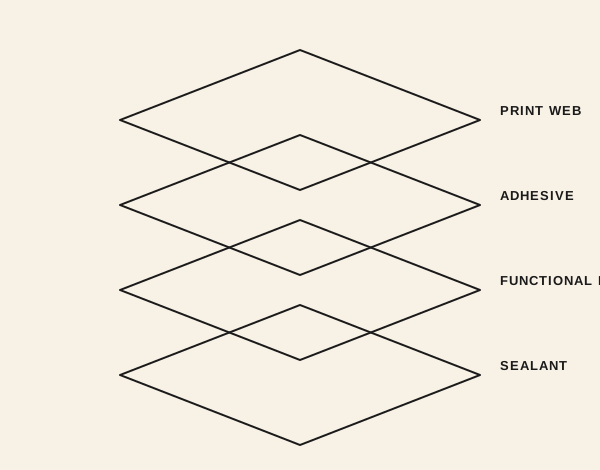
Style and structure drive the rest
Stand-up describes the shape, not the film and not the closure. Two stand-up pouches can share a width and a height and still be different packages if the bottom, the zipper, or the barrier differs.
How to choose a manufacturer is its own page. This page is the spec. The pouch overview is the pouches guide. Start here when you are writing the RFQ.
Why buyers move to stand-up pouches
Brands move to stand-up pouches when they want a package that stands on a shelf, uses less rigid material, and carries print across the front. That is a format choice. It does not set barrier, and it does not set the fill method.
Say whether the pouch will be filled by hand, on a pouch machine, or by a co-packer. The seal and the size have to work for that method.
Bottom construction
A round bottom, often called a doyen or round-bottom stand-up, and a K-seal or plow-bottom are different ways to make the pouch stand. They change the gusset, the seal, and how the pouch looks when it is full. A flat-bottom pouch is another construction.
Do not pick a bottom from a photo of a competitor and assume the seals match. Send the style you want, or send a sample. If you do not know the name of the bottom, say so and attach the pouch.
Closures and easy-open
A zipper, a slider, a tin-tie, and a spout solve different jobs. A zipper suits a product that is opened more than once. A tear notch or easy-open suits a single opening. A spout suits a liquid or a puree. Name the one you need. You can also specify no closure.
PCI can include easy-open. Confirm every other feature on the spec before two quotes are treated as the same pouch. A closure that is only in the design file, and not on the spec, will not be assumed.
Barrier
The stand-up shape does not create barrier. Moisture, oxygen, light, and odor protection come from the structure. Send the product and the shelf life you need. If you have a barrier number, send the units and the test conditions with it.
Clear film, a metallized web, and a foil layer are different answers. The mylar and foil guide is the decision page for that choice. WVTR and OTR only help when the test conditions match.
Surface print puts ink on the outside. Reverse print buries ink in a laminate, behind a clear outer web. Matte and gloss are coatings or film choices, not a second process. Count the colors you need, including white.
PCI prints on two Uteco 10 color presses, so one pass can carry up to ten inks. You do not have to use all ten. A simple brand mark and a full photographic panel are different files. The color-count guide is the place to decide.
Fill weight and pouch size
Match the pouch to the fill weight, the product density, and how full it should look. Width, height, and gusset together set the volume. A taller pouch is not always more volume if the gusset is smaller.
Send the fill weight and a note about headspace. If you have a current pouch that fits, send that size and say it is the reference. Do not scale a pouch from a drawing with no fill weight.
Spec sheet for the RFQ
Product and fill weight. Fill method. Width, height, and bottom gusset. Bottom style, or a sample. Closure and easy-open, or none. Structure or unknown. Artwork or color count. Order quantity and annual usage. Ship-to location. PCI's standard lead time is 3 to 4 weeks after artwork approval.
Request a quote
Send the pouch spec, or ask which structure fits the product before you lock the film. A sample of the current pouch is enough to open the file.
| Choice | What it changes | What to send |
|---|---|---|
| Bottom | How the pouch stands and seals | Style name or a sample |
| Closure | Reclose, pour, or one opening | Zipper, spout, tear, easy-open, or none |
| Structure | Barrier and sealant | Layers, or unknown plus a sample |
| Where the ink sits, and how many colors | File or a color count | |
| Size | Fill weight and shelf look | Width, height, gusset, fill weight |
Questions buyers ask
What structure should I use for a stand-up pouch?
The structure follows the product, the shelf life, and the fill. Send those, or send the current pouch. A stand-up shape is not a structure.
What is the difference between a round bottom and a K-seal?
They are different bottoms that help a pouch stand. They change the gusset and the seals. Send a sample if you are not sure which name matches the pouch you have.
Do stand-up pouches need a zipper?
No. A zipper is for a product that will be reclosed. A single-opening pouch can use a tear or easy-open instead. Name the closure, including none.
How much product fits in a given pouch size?
Width, height, and gusset set the volume, and the product density sets the weight. Send the fill weight with the size. Do not guess weight from height alone.
What artwork do I need for a printed stand-up pouch?
A file that matches the dieline, or a color count if the art is not ready. PCI prints on two Uteco 10 color presses. Lead time is 3 to 4 weeks after artwork approval.
See something that needs correcting? Tell Matt.